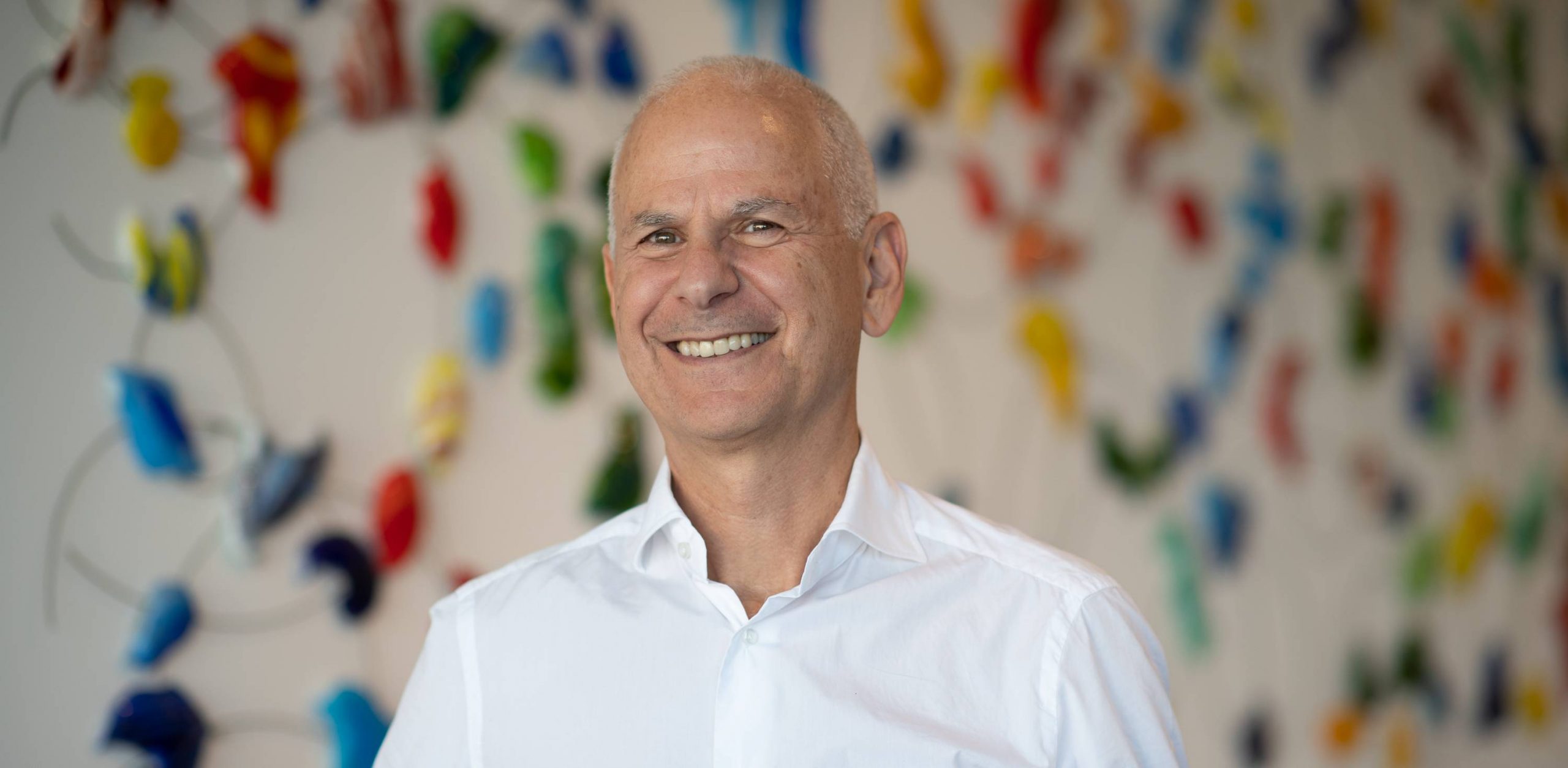
Alan’s passion for business and commerce has always been balanced with a deep commitment to family and community. His hunger for knowledge and his curiosity have broadened and enriched his life. During his legal professional practice year, he started the first of a long series of entrepreneurial ventures. All but one, (maybe two) were successful. For 30 years Alan created, acquired, built, managed and sold a number of successful businesses in industries as diverse as publishing, software and professional services. In 2005 Alan sold his legal publishing and software business, Anstat Group, to an ASX listed company. Today Alan is the Chair of Trawalla Group which he founded with his wife Carol.
Trawalla Group is the Schwartz Family Office and includes Trawalla Capital, Trawalla Property and Trawalla Foundation.
Over the years Alan has enjoyed the complex satisfaction of contributing to the not-for-profit sector. He contributed to the creation of Jewish Care, a merger of Jewish Community Services and Montefiore Homes, and was appointed its inaugural President, Life Member and Capital Appeal Patron. Alan is the past Chair of Philanthropy Australia and was recently appointed Life Member.
Alan and his wife Carol Schwartz established the Trawalla Foundation in 2004 as a vehicle for the family’s philanthropic activities. In recognition of his contribution to community and business, Alan was awarded a Centenary Medal in 2003, appointed a Member of the Order of Australia (AM) in 2007 and an Officer of the Order of Australia (AO) in June 2023.
In 2017 Alan established the Universal Commons Project to “Reform political and economic institutions so that profit and value are aligned, and business and capitalism serves the common good”. In 2023 this initiative morphed into the Transition Accelerator, an organisation dedicated to scaling commercial climate solutions.
Alan graduated from Monash University with degrees in Economics and Law (Honours) and during his first year at Monash co-authored a best-selling economics textbook, The Australian Economy.
Alan is married to Carol, is the father of four magnificent children and eight times a grandfather.
The disturbing things I learnt when my name appeared on the Rich List
Australian Financial Review, May 30
Remove ban on nuclear power and let the market do its magic
Australian Financial Review, July 19
Why Sustainable Investment Means Investing in Advocacy
Stanford Social Innovation Review, September 8
Technology Investment Roadmap leads nowhere without a carbon price
The Australian, March 22
Griffith Review, February 2
Why Milton Friedman was right and wrong
Australian Financial Review, September 13
Impact Investing Won’t Save Capitalism
Harvard Business Review, July 17
Time for the Nationals to get on board, or get out of the way
The Sydney Morning Herald, February 19
Do nothing approach is a recipe for disaster
The Australian, February 6
Australian Financial Review, September 2
Why Alan Schwartz thinks stakeholder primacy misses the point
Australian Financial Review, September 2
Time to pause the Universal Commons
April 22

After five years of reflection and learning I have decided to put the Universal Commons Project on ice. In this post I want to explain why, to reflect on what the project achieved, and to tell you about a new project I am about to undertake.
As many of you will know, the Universal Commons Project emerged from a speech I gave at the Harvard Club in 2017 and a workshop the following February at our home on the Great Ocean Road.
In the February 2021 issue of Griffith Review, I described my journey of discovery. Over the past five years I have spoken to hundreds of people and read over a hundred books, along with dozens of academic and business articles. At the end of this post, I list many of the people, books and articles who helped me understand many things that had previously been closed to me. I recommend the reading list as a guide to capitalism’s future in a time of frightening climate change.
Intellectually, it has been the most challenging and fulfilling period of my life. I have learned more about economics, politics, and philosophy over the past five years than in the previous 65. I have met many amazing, talented, and generous people. Some will be transient acquaintances – hence the thank yous below – others are likely to be lifelong friends.
Perhaps most rewarding of all, I have developed a more mature understanding of my personal ethics and passions, my intellectual limitations, and my character. I am conscientious, restless, curious and a bit of an intellectual, but I am also a practical person who likes to solve problems and create things.
In my 2017 Harvard speech – “What’s wrong with profit” – I shared my emerging concern with capitalism and its apparent inability to solve the world’s most pressing problems.
My simple thesis was this: too often, profit and value are not aligned. In other words, it is possible to earn profits without contributing to the things we all care about, like a fair and stable society and a healthy and sustainable environment. Even worse, profit is too often earned at the expense of social and environmental value.
My solution – certainly simple, probably naïve — was to include changes in social and natural value in the measure of profit. Where profit detracted from social and natural value it would be reduced by the degree to which it did so. Similarly, when profit added to social and natural value it would be increased by that amount.
At the workshop my dear friend, the philosopher Simon Longstaff, provided a guiding framework for my explorations, as well as an illuminating way to measure value. Simon proposed designing an economic system on the premise that every human being has an equal share in the value of our social and natural endowment, which he called the Universal Commons. This resonated strongly with me. If we all had an equal right to the stock of social and natural value, we would be prepared to reward those who added to this stock and demand compensation from those who detracted from it. In this way, we could create a market economy in which profit and value were aligned.
Here are some of the other things I learnt in these past five years:
For many well-meaning businesses, the answer to this conundrum has been corporate social responsibility. Yet CSR turns out to be a dead end, because it cannot, in isolation, repair market failure. Competitive pressure prevents companies from unilaterally ameliorating their negative externalities. For the same reason, they cannot invest in positive externalities.
Instead of CSR, responsible business should focus on profitable opportunities, but support changes to social norms and rules that better align profit with social and environmental value. This strategy makes sense at any time, but especially in the times of social and environmental crisis in which we live.
For me these lessons were an end in themselves. They helped me to reconcile my increasing criticisms of capitalism with my enduring belief in its value to society. To put it another way, when profit aligns with value, it is earned and deserved, but when profit is earned at the expense of value it is neither earned nor deserved. Capitalism is not a values-free zone and there is no such thing as a free market. Instead, capitalism works when markets and business serve society. They serve society when the rules governing markets are created by a healthy democracy and when business obeys the letter and spirit of the law.
These lessons helped me reconcile my support for Milton Friedman’s assertion that the role of business is to make profit with my intuitive distaste for his politics. Friedman said something like this: “the role of business is to make profits; often the easiest way to make – or defend – profits is to bend the rules in favour of profit; therefore, business has a duty to bend the rules in favour of profit; and if we – society – let them do that we are suckers”. I find Friedman’s view here both naïve because it ignores the power of money to shape politics and society, and cynical, because it dismisses the possibility of business exercising restraint in its political activities to achieve a better social outcome.
In an article I have yet to write I will explain why I believe business has two moral standards. In its pursuit of profit – in its market role – it must follow Friedman’s dictum and pursue profit within the letter and spirit of the law. But in its political role it has a duty to ensure that its actions are consistent with the public good. It cannot lobby for changes that are good for profit but bad for society or the environment. The responsible business will meet a higher standard: it will actively support changes to social norms and rules that advance not only profit but also social and environmental value.
I must acknowledge that my broader impact from all this talking, reading and thinking has been modest; articles in The Harvard Business Review, the Stanford Social Innovation Review and Griffith Review, along with several opinion pieces in leading newspapers. The feedback from many readers was heartening, but unsatisfying. “Nice in theory, but how will any of this make any difference in the real world?”
How, then, can I apply these insights to the real world?
I have decided to pivot away from my philosophical and abstract inquiry, and to apply what I have learnt to global warming – a menacing example of market failure. When profit is earned alongside carbon emissions – as it is most of the time – profit is no longer equal to value. It cannot be reversed by the unilateral altruistic actions of a few businesses. It can only be reversed by changes to social norms and rules that apply to all businesses. And yet changes to these norms and rules are hard to implement because coal and oil companies, among others, are using their wealth and power to resist the necessary changes to social norms and rules.
What should business do when the market fails, when its profit-making activities contribute to global warming and when some powerful companies use their wealth and power to resist necessary changes?
An article I published with Reuben Finighan in the September 2021 issue of Stanford Social Innovation Review argued that to align profit and value, business should combine traditional investment with investment in advocacy.
I have spent the last 18 months bringing the argument of that article to life. Indulging my practical inclinations, I have applied my commercial skills to bring a modest version of this ideal to fruition at Trawalla Group – our family investment firm.
Our first challenge was to find investment opportunities that achieved normal commercial returns whilst helping to reduce emissions. We concluded that three relatively recent changes in the social and political environment would lead to an explosion of demand for high quality products and services that reduced carbon emissions. The first were the net zero commitments of hundreds of nations and thousands of firms, the second was rapidly improving CO2e measurement standards and the third was the inevitability of a crackdown on greenwashing.
Based on this analysis our family office has strategically allocated $100 million to “climate investing”. After extensive research and Due Diligence we have committed $65 million – with a number of additional investment opportunities in the pipeline. We are confident that these investments will deliver not only full commercial returns but will also contribute to achievement of the Paris targets.
But, following the logic of the Stanford article, this was not enough. By investing for commercial returns, we were merely capitalising on decades of social and political work by civil society and philanthropy. The relentless advocacy and lobbying of many NGOs and philanthropists has created the social and regulatory changes that have contributed to the net zero commitments of many countries and thousands of corporations, which in turn has created demand for carbon-reducing products and services.
And it is this demand that will underpin the profitable investments we are setting out to make. If we are to contribute, rather than merely profit from the work of others, we believe we have a moral duty to defend and reinforce these social and regulatory changes. We have a duty to advocate and lobby for social and regulatory changes that increase incentives for investment in carbon reducing products and services.
Our second challenge has been to justify “investment in advocacy”. Whilst we have never felt the need to justify our philanthropic support for climate NGO’s, we were squeamish about doing so when we had a commercial interest in the outcome. How, in principle, was our self-serving advocacy different from the PR campaigns and the behind-the-scenes lobbying of the coal and oil companies to safeguard their profits?
Having left philosophy and abstractions behind, my response is simple and pragmatic: we are living in exceptional times, and exceptional times demand exceptional behaviour, and create exceptional opportunities. We can and must emulate the lethally effective precedent of the oil and coal industries.
Out of all this thinking has emerged an important new initiative – the Transition Accelerator. This organisation, initially philanthropically funded, will support partnerships between business and civil society organisations to lobby for changes to social norms, policies, laws and regulations that support increased investment in carbon reducing products and services.
I am excited about this initiative because I think it will combine companies’ knowledge of where the opportunities for emissions reduction lie in their sectors with the ability of the best civil society organisations to make a powerful case to government and society for legal and regulatory change. Businesses and NGOs don’t always see eye to eye, but the current moment provides an extraordinary opportunity for them to work together on a shared goal: the achievement of a net zero economy and society by 2050. In contrast to the lobbying efforts of coal and oil, our shared advocacy will run powerfully with the arc of history.
I have posted two items for your consideration: a speech I gave launching the Transition Accelerator at the Climate Investor Conference in Melbourne, and a document describing the new organisation.
A very warm thanks to all of you who have accompanied me on this journey. I would be delighted if you would consider continuing it with me. If you would, please go to our new web site www.transitionaccelerator.com.au and insert your email for further updates and posts.
Alan
February 12

The Australian recently published my op ed on why the Australian Prime Minister, Scott Morrison, should act decisively and boldly to create economic incentives for business to invest in a low carbon economy.
You might be wondering how I managed to convince a conservative publication to run an op ed about a “progressive” issue like climate change. It’s precisely this ability to cross – or transcend – the traditional partisan divide that I believe is a strength of the Universal Commons framework.
For those of you who don’t obsess about the shortcomings of capitalism every day, here is a very brief recap of our framework.
The Universal Commons Project supports capitalism, whereby private property and markets are the prime drivers of economic activity and resource allocation. At the same time, it acknowledges that when the rules governing capitalism are inadequate, business is able to profit at the expense of the common good.
We brand this behaviour as “Parasitic Capitalism”. Importantly – and this is when the Universal Commons framework eludes classification as either “left” or “right” – we agree with Milton Friedman that the business of business is business. It is merely a tool of society, just like the judiciary or the public service.
We do not blame business when the rules it follows are unsatisfactory. We do not blame business for emitting CO2e. In the absence of rules taxing or limiting CO2e emissions, a business that invests in emission reductions will be at a cost disadvantage to one that does not. If, however, CO2e emissions were taxed or capped, their true cost would be reflected in the market, and business would quickly work out how to make profits with lower carbon emissions. Those who could not adapt would quickly fail.
This framework makes it possible to create a narrative for change in the middle ground between left and right: we are pro-market, and yet we recognise that it’s the rules, from property rights to environmental regulations, that make markets work.
This framing enabled me to argue that while the business of business is to make a profit, capitalism depends on a rule-making process that isn’t distorted by private interests. Business lobby groups who oppose climate action are simply destructive. They undermine the market on which we all depend, and they must be stared down by a strong leader who serves the common good of Australia.
August 3

The primary motivation of the Universal Commons Project is the observation that profit, when narrowly defined in purely financial terms, does not exhaust “genuine value”, which includes social and natural goods alongside financial goods. This is also a primary motivation of the Integrated Reporting movement, which encourages businesses to consider social and natural impact alongside financial profit when reporting.
As such, we see the movement and the Universal Commons as fellow travellers, working towards the common goal of gearing the economy towards generating genuine value while preserving the condition of the natural environment that sustains us all.
You can read more about the overlaps between the Universal Commons and the movement on the International Integrated Reporting Council (IIRC) website. The Universal Commons Project looks forward to working closely with the IIRC in advancing our common goals in the years to come.
My Journey From Profit to Value
August 7

Two years ago I was a staunch defender of markets and a largely apolitical businessman. Today I am still a defender of markets, but I have also become an agitated voice for economic and political change, calling for a radical overhaul of capitalism. This is the story of what happened during those two short years, and how it has motivated me to create the Universal Commons Project.
It all started when I was invited to give a speech at the Harvard Club in July 2017. I decided to lightheartedly air some long held irritations I’ve had as a businessman and impact investor. I entitled the speech “What’s wrong with profit?”
I asked why is it that capitalism allows businesses to profit while harming our environment and eroding social wellbeing? Why are worthy not-for-profits universally underfunded, while we continue funding inefficient and wasteful ones? Why are good businesses that produce high quality goods and services at fair prices not respected for the value they create?
My raw intuition was that these things happen because profit is not aligned with value. If only we could align profit and value, then the forces of capitalism would be directed to create real value without it coming at the expense of the environment or social wellbeing.
It seemed a simple and elegant solution, but when it came time to put flesh on these idealistic bones, my raw intuition was no longer enough.
Two challenges immediately presented themselves. The first was how to measure what we truly value, like a stable environment or a literate community? The second was how to create an economic system that rewards those who generate value and dissuades those who would erode it?
Running on the fumes of my intuition, I zealously set out to overcome these challenges. My first inclination was to tackle the problem of how to bring externalities into the market, so things like pollution and public literacy could be folded into the way we calculate profit. If we could do that, then the market could use its power and efficiency to maximise value.
The problem was that even if we could measure externalities, why would anyone pay to use things that are otherwise freely available? Why would anyone invest in improving environmental and social assets when there is no-one to sell the improvements to?
Even with my undergraduate economics, I knew that a market cannot exist without buyers and sellers.
This is when a dear friend, the philosopher and ethicist Simon Longstaff, introduced a radical idea that shifted my thinking. He argued that all the world’s “Social and Natural Assets” – clean air, stable climate, literate communities, etc – actually belong in the commons, so they belong to all of humanity in equal shares. This was what he called the “Universal Commons.”
If our collective ownership over the Universal Commons was recognised, then we would act in our common self interest and demand payment for its use. Equally, our self interest would encourage us to reward those who preserve and enhance it. The Universal Commons would effectively solve the problem of creating a market in Social and Natural Assets. Or so I thought.
To my untrained mind, Simons idea was idealistic but not crazy. Despite a gentle warning from my wise son Oscar, I ignored the magnitude of the social and political challenges of creating the Universal Commons itself, and decided to use it as our anchor and our starting point.
The Universal Commons only further underscored the importance of measuring the condition of the world’s social and natural resources, which I called Social and Natural Assets. So I spent months researching everything I could about the history, science and philosophy of measurement, and meeting with many of the world’s leading measurement experts.
My conclusions were encouraging. It seemed that measurement science had already solved many of the technical challenges in measuring the condition of Social and Natural Assets. In fact, the history of measurement showed that new and improved measurements have consistently unlocked value, increasing human welfare and prosperity. For example, more accurate measurements of air pressure vastly increased the efficiency of steam engines.
With better measurement of changes in the quality and quantity of Social and Natural Assets, and a functioning market of buyers and sellers, we could measure the value of a sustainable environment and of a healthy society. At last I had found a useful project that I could sink my teeth into!
My initial push was to create a measurement challenge prize that would award a substantial cash prize to the person or team that developed a “measurement framework for Social and Natural Assets”. I approached NESTA (National Endowment of Education Science and Technology), a London based innovation foundation, to undertake a research project on the viability of a Measurement Challenge. NESTA thought the idea had merit but questioned the broad scope of this Challenge. We agreed that they would limit the scope of their research to the measurement of clean air for human health.
Now that our contribution to humanity was under way, it was time to return to the question we had conveniently “solved” via the concept of the Universal Commons: who would be the buyers and sellers of clean air? What would a market for clean air actually look like?
I needed an economic evaluation of the Universal Commons Project, which brought me to a brilliant economist working at the London School of Economics, Reuben Finighan. Reuben’s economic evaluation was sobering. Whilst endorsing our aspiration to align profit with value, Reuben questioned the timing of the Measurement Challenge and encouraged us to think more deeply about the nature of markets and how they come into existence. He also raised a number of economic, social and political considerations that accelerated my late onset social and political awakening.
It was time for our first pivot.
It was time to cease relying on the concept of the Universal Commons as the panacea for creating demand and supply and return to the social and political elephant in the room: why would anyone invest in clean air when it is free and there is no-one to sell it to?
So we asked NESTA to pause their research and asked Gavin Starks, a London-based entrepreneur and environmental activist, to run a Market Design Project to answer the central economic questions of supply and demand.
The key output of the Market Design Project was the observation that people would only invest in externalities if they either volunteered to or were forced to do so. Some already volunteer to do so, such as philanthropists, Impact Investors and responsible corporations. But many don’t. The Market Design Project concluded that if the Measurement Challenge produced a good measure of clean air for human health, we could harness voluntary demand and develop at least a voluntary clean air market. We could offer this capability to cities, states and national governments for adoption and strengthening via regulatory reform.
Before we had the time to evaluate this idea, it was derailed over a coffee with Eric Beinhocker, Executive Director of the Institute for New Economic Thinking at Oxford. After I described our Market Design Project and our hypothesis, Eric asked why we were creating a market to demonstrate how externalities could be internalised when we could just describe an already existing one for carbon dioxide equivalent (CO2e)?
Eric was right. The CO2e market is an emerging proof of concept of an externality being internalised. We would save a lot of time and money by telling the CO2e story rather than by recreating it using clean air.
The story itself is compelling. Around 250 years ago, global warming was not a concern, and CO2 was not an externality. Then 163 years ago the scientist Eunice Foote revealed that the world was warming and the cause was CO2. Her theory kicked off a long process, substantially confirming our clean air hypothesis. The first step was a scientific and social consensus around measurement of CO2e. Then the science connecting CO2e and global warming became widely accepted and a critical mass of people started to feel strongly enough to want to do something about it. CO2e became a negative externality. This led to a level of demand emerging, enabling the creation of voluntary markets for trading CO2e. The final step is slowly unfolding today, with governments responding to public demand and using the knowhow and technology of voluntary markets as the basis for regulatory intervention.
Although many despair that we are doing too little too late, there is little doubt in my mind that within a decade or two CO2e will no longer be an externality. The full cost of CO2e will be included in the profit of all corporations. Doing so will be “mainstream business.” Then, when it comes to CO2e and global warming, profit and value will be aligned.
For the Universal Commons Project, our ability to connect the CO2e story to our broader mission of aligning profit and value has been a breakthrough. We can see that focusing on projects addressing the scientific and technical challenges of measurement and market design is necessary but not sufficient. The CO2e story shows us that we have vastly underestimated the role of story-telling and consensus building, and the inevitability of political struggle.
Reuben also helped us take a big picture perspective on what we’re trying to achieve. He showed that the challenge of aligning profit with value is just a modern manifestation of what has been called by evolutionary biologist David Sloan Wilson the “Fundamental Social Problem.” This is the problem that all life has faced over the past four billion years, and all societies have faced over the last several millennia. At its core, it is the challenge of aligning individual benefit (profit) with group benefit (value).
He also gave us reason to be optimistic about our ability to advance our mission. In his words “we have the evidence necessary to tell a grand, unifying story about the history of life and society on Earth as being a 4-billion year search for mutualistic strategies”.
If you believe that we have progressed as a species, as I do, you must attribute it to our unique human ability to develop new institutions to enable ever greater spheres of cooperation and mutualism: from tribes to metropolis, from barter to money, from feudal societies to modern capitalism, from monarchy to democracy.
By aligning our mission and the Universal Commons with Reuben’s vision of a truly “Mutualistic Capitalism,” we were able to tap into a new, and academically rigorous conceptual framework. He also suggested that our strength was not necessarily in making incremental progress on the scientific and technical challenges, but rather encouraged us to invest in the transformative power of “big ideas, strongly articulated”. Change is only initiated when a critical mass of people recognise a challenge or an opportunity and wish to do something about it. And that change is made harder because those who benefit from free negative externalities are likely to resist paying for those externalities. So if we wanted to change the current economic system and its institutions, the starting point was changing people’s beliefs. This requires story-telling and consensus building.
I can now see that my intuition that profit must be aligned with value was a good one, but it fell far short of being a complete answer.
I can see that capitalism today is under siege because there is an emerging view that it no longer serves the common good. It has become what we call “Parasitic Capitalism.” I believe the Universal Commons can act as a powerful anchor for a new vision for Mutualistic Capitalism, one where profit can be earned, but not at the expense of the Universal Commons, and we must reward those who enhance it.
So now I believe we have a solid diagnosis of the problem (Parasitic Capitalism) and a good conceptual idea of what the solution would look like (Mutualistic Capitalism). We have also highlighted some key stepping stones to get there, like improving measurement standards, creating markets and improving institutions. The next step is to translate all this into concrete action. Our challenge is not finding something useful to do; our challenge is choosing the best thing to do with our finite resources. So stay tuned!
The Universal Commons Project has come a long way and we have a long way to go. We are approaching the end of the beginning. We are excited to get on with our adventure and to share the journey with you.
What next for the Universal Commons
September 16

In my last blog I described my personal journey from profit to value. We now have a firm conceptual foundation for the Universal Commons project, which is to transition the economy to “Mutualistic Capitalism”, where profit is aligned with value and businesses can only make a profit when they simultaneously advance the common good.
The reason this transition is crucial is that while our current economic system has generated great wealth, it is failing both people and the planet. This is because the engine of capitalism – profit – doesn’t reflect everything that we truly value, like clean air, safe communities and a stable climate. As such, much economic activity can end up harming people and degrading the environment.
When profit is not aligned with value, we end up with “Parasitic Capitalism”, where businesses can make a financial profit while harming people or the environment, effectively making them “parasites” on society. We don’t blame businesses for this; they’re just following the economic rules that society has set for them.
One of the main reasons that profit is misaligned with value is the problem of externalities, which are byproducts of business that positively or negatively affect society. We believe that we can internalise externalities by changing the economic “rules of the game,” thereby realigning profit and value and moving from Parasitic Capitalism to Mutualistic Capitalism.
We acknowledge that changing the economic rules of the game will be a slow, iterative, multidimensional and complex process. However, the rules of the game in relation to carbon emissions are rapidly changing so that innovative businesses can make a profit while combating climate change. This can serve as a case study and model for other externalities.
We have decided to build on these foundations and spend the next 12 months focussing on communications outreach and commercial ventures.
Our communications activities will share my personal journey and spread the message of the Universal Commons to the business, investment, philanthropic and Impact Investment communities.
The core message is that we need structural reform to the “rules of the game” so that we can enjoy prosperity without degrading the Universal Commons, upon which we all depend. Our first published article was a response to the recent US Business Roundtable statement that business should shift from generating only shareholder value to generating stakeholder value.
While we endorsed the idea that business should consider the impact it has on a wide range of stakeholders, we argued that there is a broader issue at stake, which is the way we think about profit itself. If the underlying “rules of the game” are left unchanged, and profit is not aligned with value, then businesses that invest in stakeholders at the expense of profit will be at a competitive disadvantage to those that continue to focus exclusively on generating a financial profit. You can read the editorial, and accompanying interview, here.
The for-profit arm of our family office, the Trawalla Group, will pursue opportunities to invest in purely commercial ventures in the rapidly emerging markets for carbon emission reductions and clean energy. This will serve as a case study and a proof of concept for how to internalise externalities and align profit and value.
It will demonstrate how increasing levels of public and investor pressure, the emergence of voluntary markets, improved measurement and the prospect of future regulatory change are inexorably changing the economic rules of society so that an externality like carbon emissions is being internalised, making it possible for businesses to profit by investing in its reduction.
By investing in carbon emission reductions and clean energy, and achieving market rates of return, we hope to encourage others to follow. We also hope our carefully targeted investment will be an exercise in market transformation, helping to close the gap between the market of today and a future market where profit is closely aligned with value. We even hope to see the day when we need to exit this market because it has become too competitive and profit margins are being squeezed!
This 12 month focus is in no way a reflection of diminished ambition. Our long term goal remains nothing less than achieving transformative change in the way our economy works. Our mission remains unchanged: to help realign profit and value, and thus shift our economy from Parasitic Capitalism to Mutualistic Capitalism.
In future blogs we will share the fruits of our communications efforts, and subject to commercial confidentiality, sharing our mutualistic profit seeking activities. As always, we welcome your feedback.
December 5

Mid-way through this year, when my friends asked me “how is it going with the Universal Commons?” I would often feel a rush of anxiety. This was because the deeper I dug into the challenges facing our society and economy, the more gnarly the problem looked, and the more elusive the solution seemed.
But here at the end of 2019, I now feel differently. Here’s why: the key question I raised over two years ago – “what’s wrong with profit?” – has exploded into the mainstream in recent months. In August the US Business Roundtable caused a global stir when 181 CEOs signed up to a new Statement on the Purpose of a Corporation. This declared that business ought to serve all stakeholders, not just maximise shareholder return. This was effectively an acknowledgement by some of the most powerful and influential business leaders in the world that profit and value had become misaligned within our current economic paradigm.
Meanwhile, major media outlets, such as the Financial Times, have made bold statements about the need to reform capitalism and dedicated entire special reports to transforming business and investment practices to align profit with purpose. Similar discussions have appeared in The Economist, the Harvard Business Review and other outlets that can hardly be called radical, including a small contribution in the Australian Financial Review by myself.
The inability of our current political institutions and our current form of capitalism to address rising inequality, climate change and unsustainable production and consumption are forcing all of us to question these institutions.
These developments have enabled me to realise something incredibly important and powerfully motivating: I am not alone. Not only have I been able to join and contribute to a growing and vibrant “Movement” of people and organisations seeking to reform these institutions, but I also have powerful allies here in the form of Reuben Finighan, our chief economics advisor, and Tim Dean, philosopher and lead communicator for the Universal Commons.
We all acknowledge that systems change is a difficult process, requiring deep thinking, patience, flexibility, resilience and collaboration. Like all Movements, this one will unleash not only great thinkers, well-meaning contributors and collaborators but also fashionistas, opportunists and exploiters. There will be dead ends and there will be false paths. There will be breakthroughs and there will be setbacks. And there are no guarantees in life, let alone when it comes to reforming a system as complex as capitalism.
Still, we look forward to contributing to the messy and difficult process of systems change. After all, I don’t believe we have much choice. Every news headline about the growing climate crisis, about rising inequality, about the depletion of our precious natural resources, about poverty within the wealthiest nations on this planet all serve to sustain the fire that drives us to push for positive change.
As I communicated in an earlier blog, we have decided to focus on two things for the next 12 months. The first is seeking opportunities to invest in commercial renewable energy projects. I can’t help but to think of Noah, despairing that the rising flood waters would never recede, yet he sent a dove out to find land. The first did not return; neither did the second. But the third did return, and it had a twig in its beak. This was evidence that the waters had receded and there was land to be found.
Like Noah, we are looking for evidence of change in the world. If we can find purely commercial opportunities in renewable energy projects we will know that the social, political and regulatory environment is moving in the right direction. And the search for opportunities will expose gaps which we can describe in our writing.
The second focus is to continue to research and spread our message to the business community and the public. We hope to contribute by providing useful frameworks for the Movement that can bring clarity to the challenges we face, and help identify inflection points that can produce real change.
We are also aiming to offer commentary about individuals and groups who are part of the Movement. We will try to help identify dead ends and false paths, and we will celebrate breakthroughs and urge resilience during setbacks. We are looking forward to collaborating with fellow travellers, but we are also determined to preserve our independence, because the Movement will need a range of views.
So as this eventful year comes to a close, I want to thank you for following our progress. I wish you a peaceful and restful year end look forward to keeping you informed of our progress during 2020.